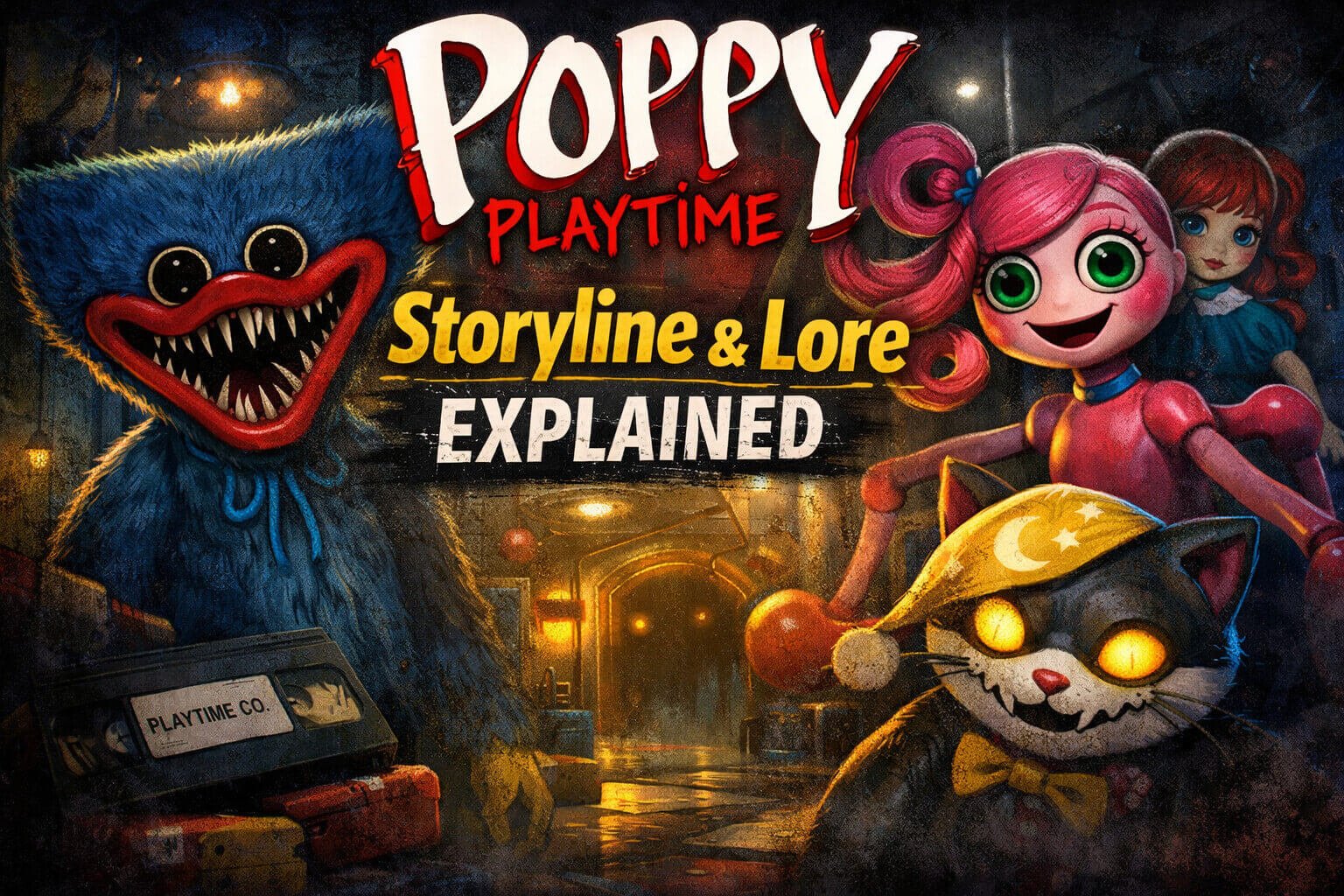
There’s something uniquely fascinating about Poppy Playtime — a horror game that mixes toys, nostalgia, and psychological dread in a cinematic way that keeps fans asking questions. The deeper you explore the factory, the more tangled the story becomes. Strange experiments, missing employees, living toys, and cryptic tapes all create a universe rich in lore that continues to unfold with each chapter.
This blog breaks down the Poppy Playtime storyline and lore in a way that’s easy to follow — from Chapter 1 all the way to the upcoming mysteries teased in Chapter 3 and beyond. Whether you’re new to the franchise or already deep in the wiki rabbit hole, you’ll find details, theories, and character backgrounds that connect everything together.
What Is Poppy Playtime About? The Premise
At its core, Poppy Playtime centers on an abandoned toy factory once owned by Playtime Co. A decade after its mysterious shutdown, you return as a former employee after receiving a strange VHS tape. Something — or someone — wants you to come back.
Once inside, you discover the factory is not empty. Toys are moving, hunting, and communicating. Something terrible happened here, but the truth isn’t straightforward. Instead, it’s scattered across logs, tapes, codewords, character behavior, and environmental storytelling.
The Lore Roots: Playtime Co. & The Experiments
Before toys came to life, Playtime Co. appeared to be a massive, thriving toy company. But beneath that colorful surface, the company was conducting biological and psychological experiments on living subjects — including children.
The core secret of the factory revolves around “The Bigger Bodies Initiative,” an ethically horrific project that aimed to fuse real biological consciousness into animatronic toys.
Victims became products.
Employees became test subjects.
Toys became monsters.
The factory’s greatest success — and greatest failure — was the creation of sentient toys, each with distinct personalities, memories, and trauma.
Chapter 1: Huggy Wuggy & The Awakening
Chapter 1: A Tight Squeeze introduces the iconic blue character: Huggy Wuggy.
Outwardly adorable and marketed to children as a cuddly friend, Huggy becomes the first visible killer toy, stalking the protagonist through vents, rafters, and hallways.
Things Chapter 1 reveals:
-
Someone sent you the tape intentionally.
-
Huggy has awareness, predatory intelligence, and territorial behavior.
-
The factory’s shutdown wasn’t an accident.
-
The toys haven’t simply “malfunctioned” — they have motives.
Chapter 1 ends with a new mystery: Poppy, the doll that shares the game’s name. The player releases her from a glass case, triggering the rest of the story.
Chapter 2: Mommy Long Legs & The Bigger Picture
Chapter 2: Fly in a Web expands everything — lore, characters, intention, and setting.
Here we meet:
-
Mommy Long Legs
-
Bunzo Bunny
-
The Mini Huggies
-
PJ Pug-a-Pillar
Mommy Long Legs is the most important character for storyline development. Unlike Huggy, she speaks, negotiates, emotionally reacts, and manipulates the protagonist. She remembers the experiments done on her and resents both the scientists and the player.
Key lore reveals from Chapter 2:
-
Playtime Co. intentionally tortured test subjects.
-
Poppy wants something from you.
-
Poppy appears to know more about the experiments.
-
Toys suffer psychologically — they can feel pain, jealousy, and abandonment.
-
The factory contains multiple departments, all complicit in the experiments.
By the end, Poppy betrays you by preventing your escape.
Poppy’s Role in the Storyline
Despite giving the game its title, Poppy remains mysterious and morally gray. She is both victim and possibly villain.
Questions fans debate:
-
Did Poppy summon the protagonist?
-
Is she seeking liberation, revenge, or control?
-
Is she manipulating the toys or freeing them?
Her dialogue suggests she sees you as useful and possibly controllable. This makes her one of the most intriguing pieces of the lore puzzle.
Chapter 3 & The Deeper Psychological Horror
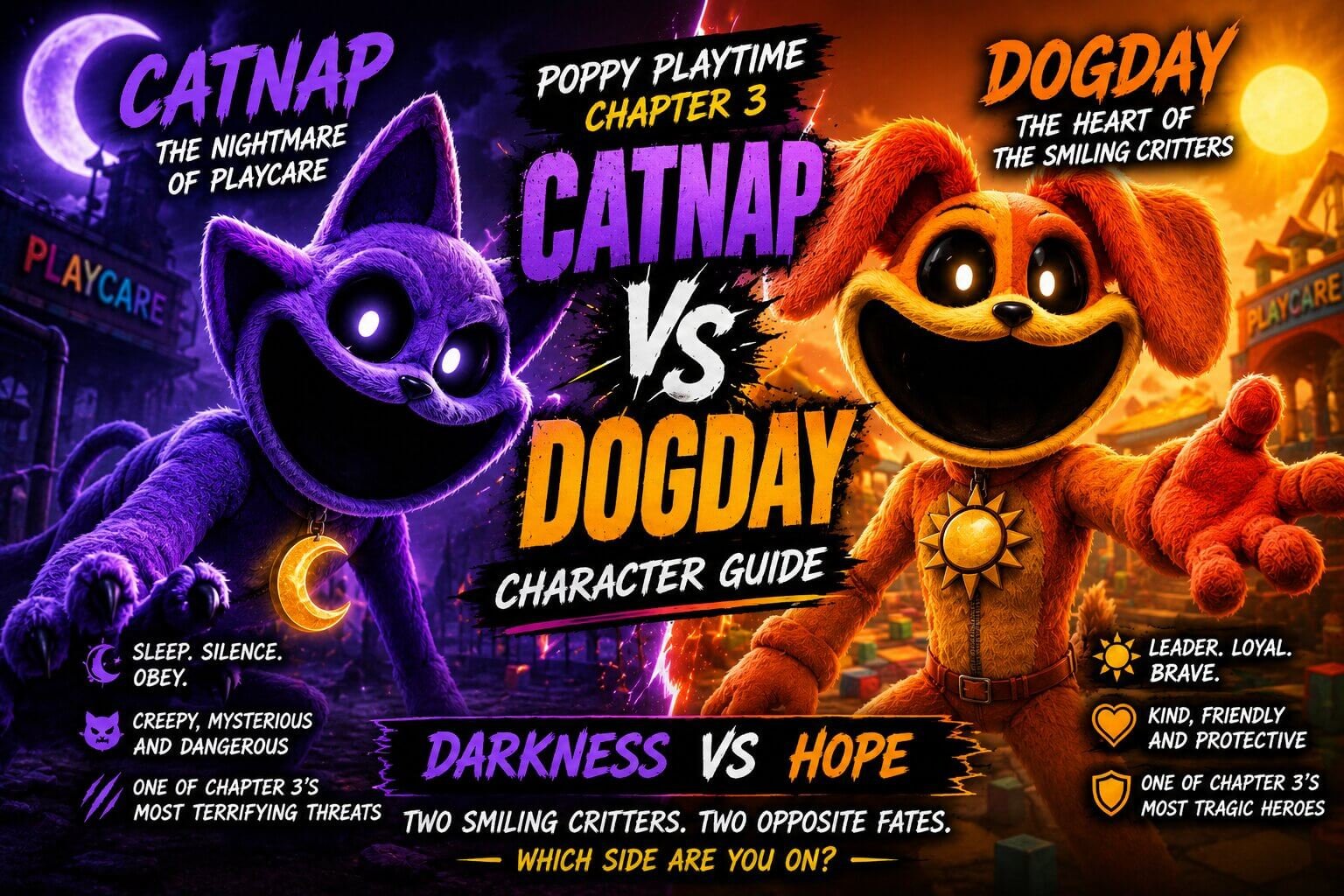
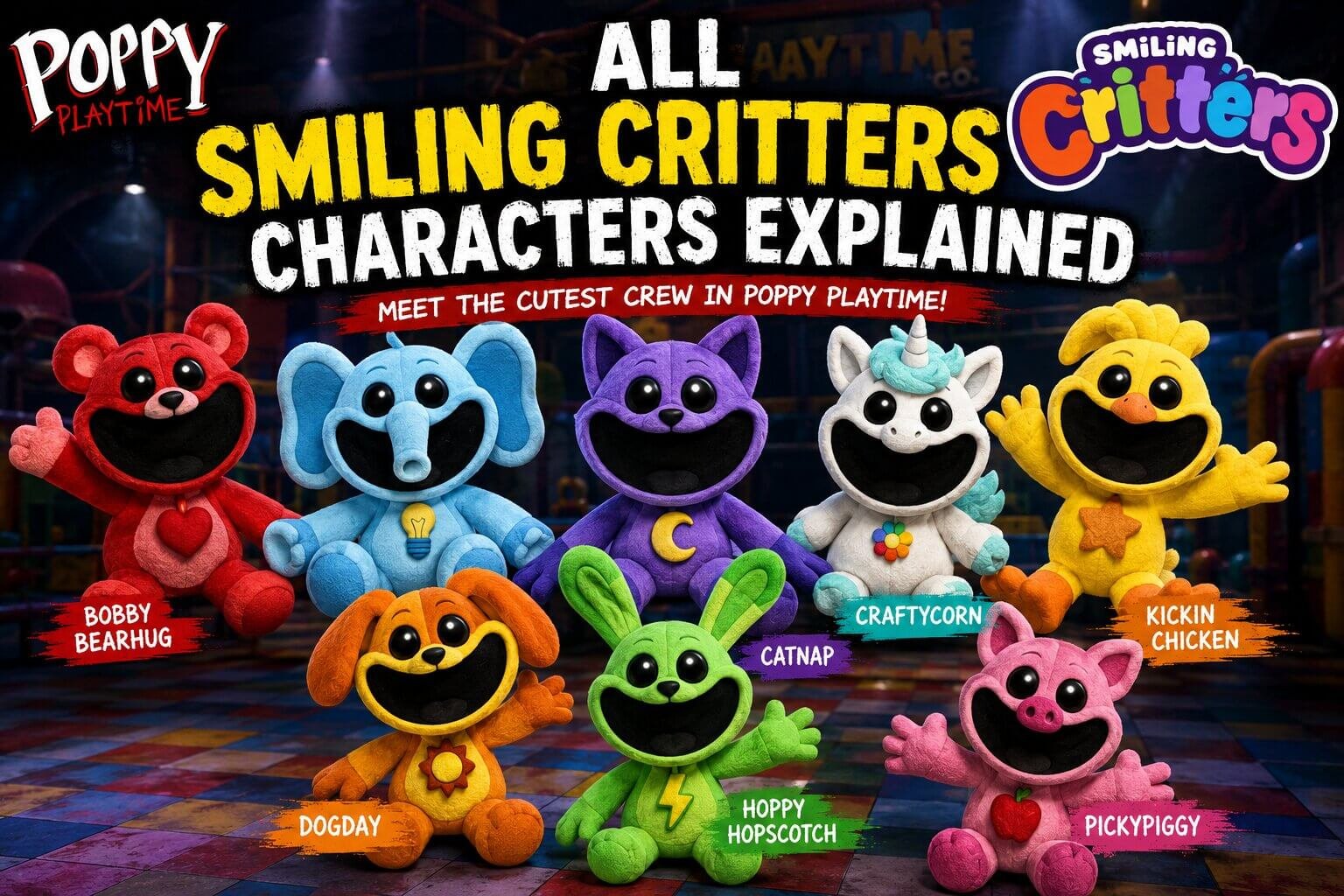
With Chapter 3 revealing CatNap, DogDay, and The Smiling Critters, Poppy Playtime takes a dark psychological turn. Chapter 3 lore implies the experiments involved emotional conditioning — children’s fears, dreams, and memories influencing toy behavior.
New implications include:
-
The factory might still have living children.
-
The experiments could continue post-shutdown.
-
Poppy may have her own agenda tied to freedom or dominance.
Characters like CatNap connect to nightmares, sedation, and unconscious manipulation — expanding the “living toy” trope into mental control themes.
Major Lore Themes in Poppy Playtime
The franchise blends multiple horror subgenres:
Childhood Innocence vs. Industrial Cruelty
Toys are symbols of comfort, twisted into tools of violence.
Corporate Ethics & Exploitation
Playtime Co. parallels real-world unethical scientific institutions experimenting under capitalism.
Identity & Consciousness
The question “What makes a toy alive?” is philosophical and horrific.
Memory & Trauma
Toys exhibit memory retention and psychological scars.
The VHS Tapes & In-Game Files Explained
Poppy Playtime uses tape recordings to reveal:
-
Employee testimonies
-
Warnings
-
Experiment documentation
-
Propaganda marketing
These provide fragmented lore — never giving complete answers, always leaving room for theories.
Fan Theories & Speculation
The community has filled gaps with theories such as:
-
The Player Theory — suggesting the protagonist was once a test subject.
-
The Poppy Control Theory — suggesting Poppy wants to lead the toys.
-
The Revival Theory — suggesting Playtime Co. wanted immortality through toys.
The genius of Poppy Playtime’s lore is that none of these are confirmed — yet all feel plausible.
Storyline Impact on Merchandise & Culture
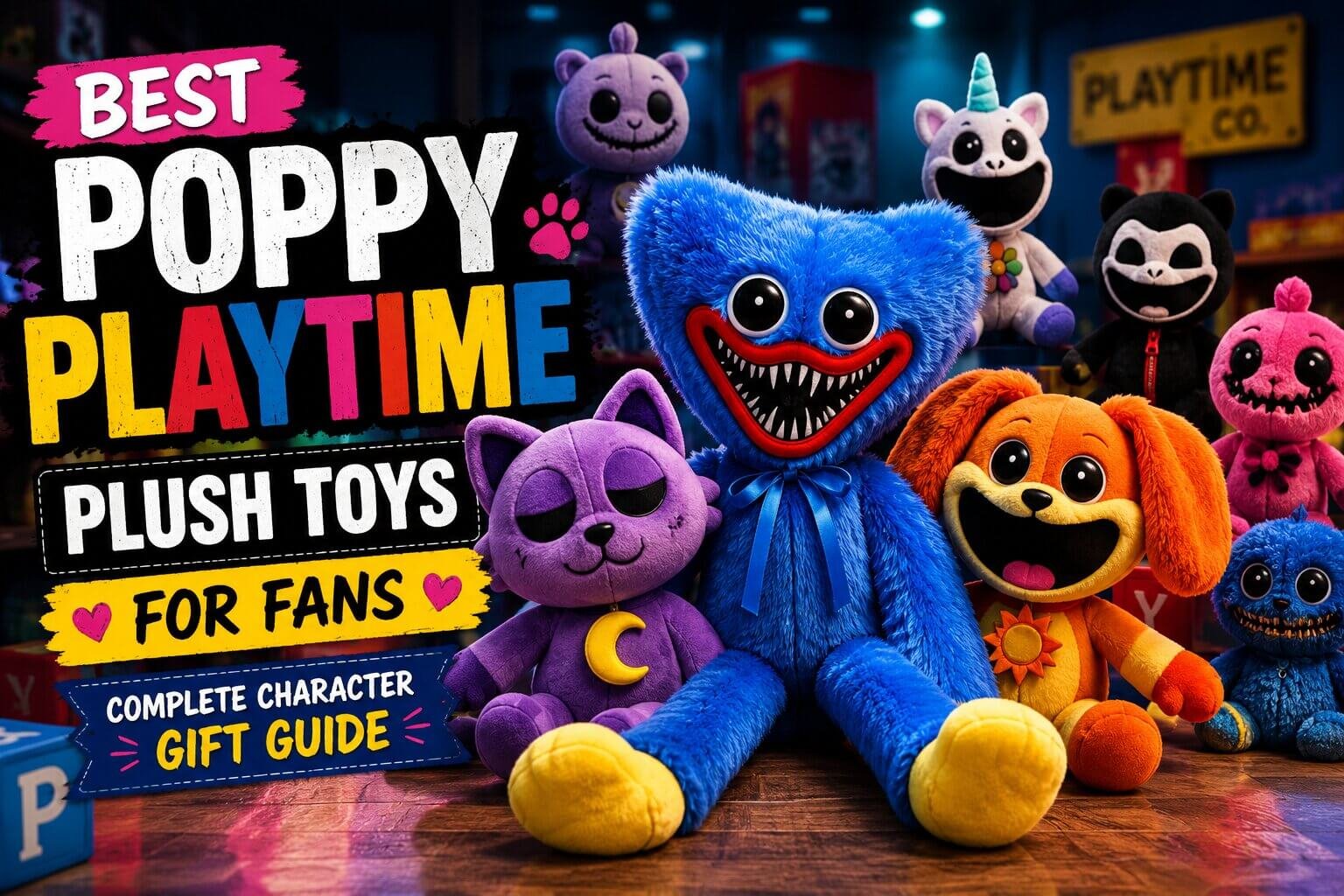
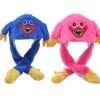
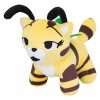
Despite its horror tone, Poppy Playtime has spawned a massive wave of merch, cosplay, TikTok edits, and plush collections — turning characters like Huggy Wuggy and CatNap into modern pop-culture icons.
Fans who love collecting Poppy Playtime plush and figures can find themed merchandise at stores like FiveStarToy which specializes in unique creepy plush and game-inspired toys.
Why the Lore Works So Well
Poppy Playtime succeeds because it blends:
-
Mystery
-
Psychological horror
-
Cute aesthetics
-
Fragmented storytelling
-
Replay value
Players are not handed answers — they earn them.
What’s Next for Poppy Playtime?
Future chapters are expected to uncover:
-
Poppy’s true motive
-
The origins of the first experiments
-
The identity of the Player
-
Whether the factory is the only facility
The story is not about survival — it’s about uncovering truth.
Final Thoughts
The Poppy Playtime storyline & lore continues to evolve into one of the most intriguing narratives in indie horror. With sentient toys, corporate conspiracy, and psychological trauma layered beneath gameplay, each chapter deepens the mystery. The more answers players uncover, the more questions appear.
Whether you’re here for the horror, the puzzles, or the characters, one thing is certain — the Playtime Co. factory is far from finished.
FAQ: Poppy Playtime Storyline & Lore
What is the main story of Poppy Playtime?
The story follows a former Playtime Co. employee returning to a mysteriously abandoned toy factory ten years after all staff vanished. Upon entering, the protagonist discovers the toys have become sentient, hostile, and psychologically aware. The goal shifts from simple escape to uncovering how and why the toys were made alive.
Who is Poppy in Poppy Playtime?
Poppy is a living doll created by Playtime Co. and named after the game itself. She appears intelligent, emotional, and manipulative. Her motives are unclear, making her one of the most complex characters in the lore.
Why are the toys alive in Poppy Playtime?
Lore tapes reveal the existence of The Bigger Bodies Initiative, a Playtime Co. experiment involving the fusion of biological consciousness into toys. Victims — often children — became the souls of the living toys.
Is Huggy Wuggy the main villain?
Huggy Wuggy is the first antagonist introduced, but not the overarching villain. Later chapters show other key antagonists like Mommy Long Legs, CatNap, and The Smiling Critters. Poppy herself may also be morally gray rather than heroic.
What does Poppy want from the player?
Poppy appears to need the protagonist’s help navigating the factory and freeing her from containment. However, her behavior suggests deeper motives tied to control, freedom, or revenge against Playtime Co.
What happened to Playtime Co. employees?
Most vanished after the experiments escalated within the factory. While some may have escaped or been converted, the lore implies mass deaths, kidnappings, and forced experimentation.
Is the protagonist connected to the experiments?
A popular fan theory suggests the protagonist may have once been a test subject, explaining their familiarity with the factory. Although unconfirmed, many story cues support this theory.
What does Chapter 3 reveal about the lore?
Chapter 3 introduces darker psychological themes involving sedation, nightmares, emotional conditioning, and mental trauma through characters like CatNap and DogDay — indicating the experiments went beyond physical transformation.
Are children involved in the Poppy Playtime experiments?
Yes. Lore strongly implies children were the primary test subjects used to create living toy entities — making the storyline significantly darker on a symbolic and ethical level.
Will more chapters explain the factory’s origins?
Yes. The developers have confirmed future chapters will explore the deeper origins of the experiments, Poppy’s intentions, and the true identity of the protagonist.
Is Poppy Playtime connected to real-life corporations or scandals?
While fictional, the story parallels real themes of unethical scientific research, corporate cover-ups, and psychological exploitation — making the universe feel disturbingly believable.
Why do fans care so much about the lore?
Because the game leaves intentional gaps. Theories, tapes, and hidden details create a puzzle-like narrative where fans actively participate in decoding the story rather than passively consuming it.


Leave A Comment